
Over the past 13 weeks, in EDUC362 we have explored and learnt about an abundance of emerging technologies. We have investigated their uses and discovered how these devices can be powerful platforms in inspiring students’… More

Elise's 362 Blog
Over the past 13 weeks, in EDUC362 we have explored and learnt about an abundance of emerging technologies. We have investigated their uses and discovered how these devices can be powerful platforms in inspiring students’… More

The advancement of digital games has been significant over the past 30 years with the inclusion of features like three-dimensional graphics, multi-player options, high-speed telecommunication, immersive environments and so much more (Kebritchi, 2010). With the… More

Virtual reality (VR) is a tool that allows students to indulge in a new world with a 360-degree view of their surroundings (Southgate, 2018). These VR platforms encourage students to explore worlds that are either… More

As a pre-service teacher I considered the use of augmented reality (AR) to be a futuristic application for education. However, after spending sometime exploring the various resources already available in schools I was left surprised and excited to see what the future of AR education will look like.
AR is described by Azuma (1997, as cited in Bower, Howe, McCredie, Robinson & Grover, 2014, p.1) as systems that allow both ‘real and virtual objects to co-exist in the same space and be interactive in real time.’ In recent years, AR has gradually become more accepted by society and thus has introduced new possibilities for teaching and learning in schools (Wu, Lee, Chang & Liang, 2013). Ultimately the use of AR in our classrooms will change the way students receive and comprehend information and lead students to engage through a creative and authentic exploration of the real world (Dede, 2009). A number of AR resources have been developed to assist in the development of science and mathematics education, this is particularly beneficial as these subject areas cover a number of abstract concepts that can be difficult to understand and visualise (Wu, Lee, Chang & Liang, 2013). For example, the app ‘AR Flashcards Space’ allows students to see planets up close through their devices (phones, iPads etc) and use the app to learn about key facts and information relative to space. Additionally, AR systems have been designed to support students with diverse needs, by creating resources that help students overcome learning barriers and improve speaking and listening skills. (Liu, 2009).

Interestingly, AR has been classified into three main categories deciphering what activities will be conducted during the experience. These categories include;
1. Emphasising ‘roles’
Here students engage in role play, simulations and collaborate with each other through creative avenues.
2. Emphasising ‘locations’
Students interact with the physical environment and are given opportunities to conduct investigations into environmental issues.
3. Emphasising ‘tasks’
Students design learning tasks in AR environments involving challenges, problem-based learning and creativity.
(Wu, Lee, Chang & Liang, 2013)


The potential of AR in education is exciting and allows for various creative avenues of learning to be adopted. It has the ability to engage, motivate and interest learners in authentic experiences and encourages students to think creatively (Bower, Howe, McCredie, Robinson & Grover, 2014). However, like many other technological resources discussed throughout this blog it requires significant teacher training and knowledge in order for it to be implemented successfully (Wasko, 2013).
References
Bower, M., Howe, C., McCredie, N., Robinson, A., & Grover, D. (2014). Augmented Reality in Education–Cases, Places and Potentials. Educational Media International, 51(1), 1-15.
Dede, C. (2009). Immersive Interfaces for Engagement and Learning. Science, 323(5910), 66-69.
Liu, T.-Y. (2009). A Context-Aware Ubiquitous Learning Environment for Language Listening and Speaking. Journal of Computer Assisted Learning, 25(6), 515-527.
Wasko, C. (2013). What Teachers Need to Know about Augmented Reality Enhanced Learning Environments. TechTrends: Linking Research and Practice to Improve Learning, 57(4), 17-21.
Wu, H., Lee, S., Chang, H., & Liang, J. (2013). Current status, opportunities and challenges of augmented reality in education. Computers & Education, 62, 41-49.

You would have heard people say “Robots are taking over the world!” I have to say I was particularly sceptical when i considered the relevance and applicability of robots in education. Today, robots are undertaking an abundance of tasks that were originally performed by humans. These tasks include car manufacturing, driving cars and even doing the vacuuming! How convenient! BUT… do robots have a place in education?
Research suggests that robotic tools support the development of creativity and 21st century skills (Altin & Pedaste, 2013) and engage students’ curiosity and interest through hands-on tasks. (Alimisis, 2013).
Meet Dash and Dot
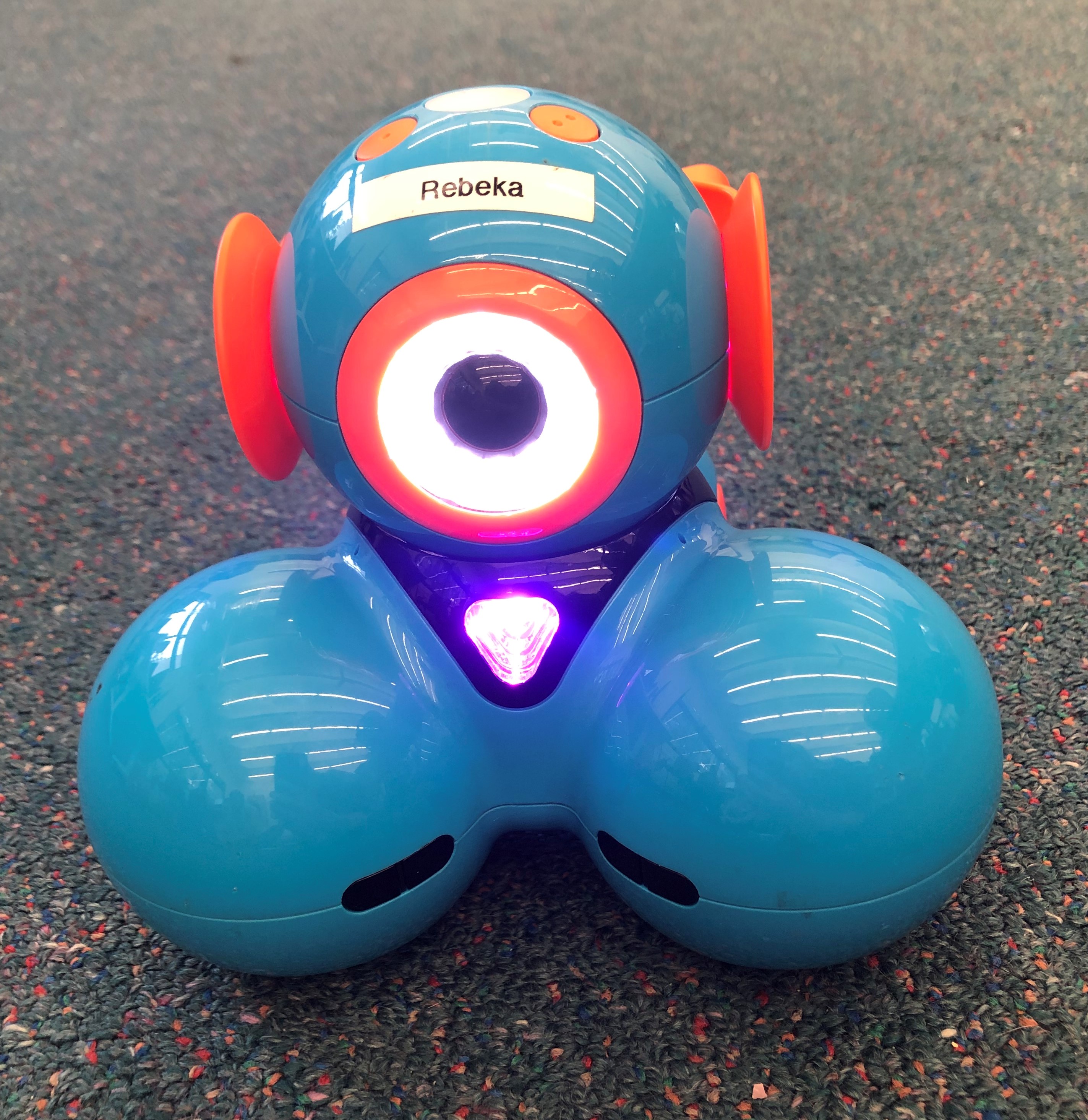
Dash and Dot are two robotic friends designed for young learners beginning their robotics journey. (Sansing, 2015). The robots and their partnering apps, Blockly and Wonder provide a user-friendly program that assists students to explore coding, planning and movement. The robot is designed to encourage hands-on learning and to make creative problem-solving experiences life-like and practical. (“Wonder Workshop”, 2019). There are many additional resources available with the up-take of Dash and Dot, one resource I would highly recommend are the challenge cards. These cards provide students with specific tasks to complete through games that teach them a number of coding skills. As students progress through the cards the difficulty level increases.
Does robotics fit within the curriculum?
Yes, robotics is a great resource for science and technology learning as students learn to program, code and become familiar with technological applications. (Alimisis, 2013). However, robotics is reasonably limited in its practicality and diversity in other KLA’s. I do believe robotics can be used within cross-curricula areas however the concepts need to be stretched. For instance, in an english lesson, the teacher could ask students to write a narrative with Dash impersonating the main character. Students can organise and code the robot to depict the journey described in the narrative, this could involve moving left, right, forwards and backwards, flashing lights and even narrating the story by speaking. There is no doubt that a task like this incorporates creativity, computational thinking and an abundance of technological skills but is the incorporation of technology making this activity overly complex?
References:
Alimisis, D. (2013). Educational Robotics: Open Questions and New Challenges. Themes In Science And Technology Education, 6(1).
Altin, H., & Pedaste, M. (2013). Learning Approaches To Applying Robotics in Science Educaion. Journal of Baltic Science Educaition, 12(3), 365-365
Sansing, C. (2015). Coding Made Fun with Robots. School Library Journal, 61(8).
Wonder Workshop | Home of Dash, Cue, and Dot – award-winning robots that help kids learn to code. (2019). Retrieved from https://www.makewonder.com/robots/dash/
For too long students have been learning only administrative IT skills at school. (Andrews, 2016). As an epidemic of technological advancements continue to develop in modern society we, as educators, need to consider how to improve the way we teach our students computer science concepts and skills (Schmidt, 2016), Not only to equip young people with the skills they need to survive in a technologically advancing society, but also to foster interest in professional career options. Research suggests that too many workers in the current workplace lack the skills necessary to navigate their way around the digital systems that exist today. (Andrews, 2016). Ultimately, training students in computational thinking skills will equip today’s students with creative and digital capabilities to combat the dilemmas faced by many civilians today.
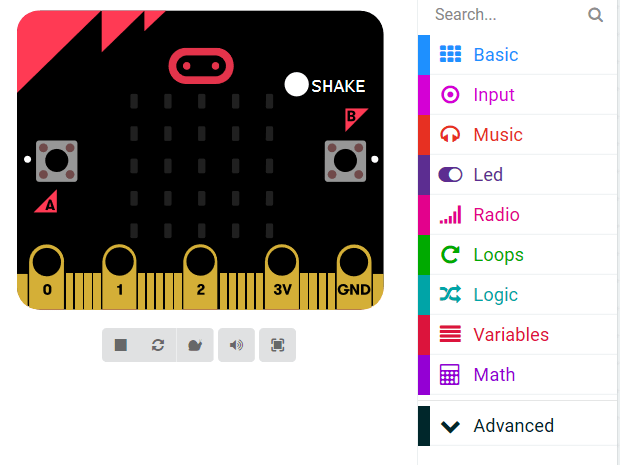
The Micro:bit is well known for its simple platform structure and ease of use, making it extremely attractive to both students and teachers. (Schmidt, 2016). This technology eliminates the hurdle that coding is to hard with its simple, colourful and accessible structure. (Andrews, 2016). However, despite its simplicity it is powerful enough to allow students to create a number of creative applications. (Schmidt, 2016). Different creations include bag alarms, stress level indicators, burglar alarms and even simple games. For example, in class this week we learnt how to code and instruct the micro:bit to play the famous game ‘scissor, paper, rock’.
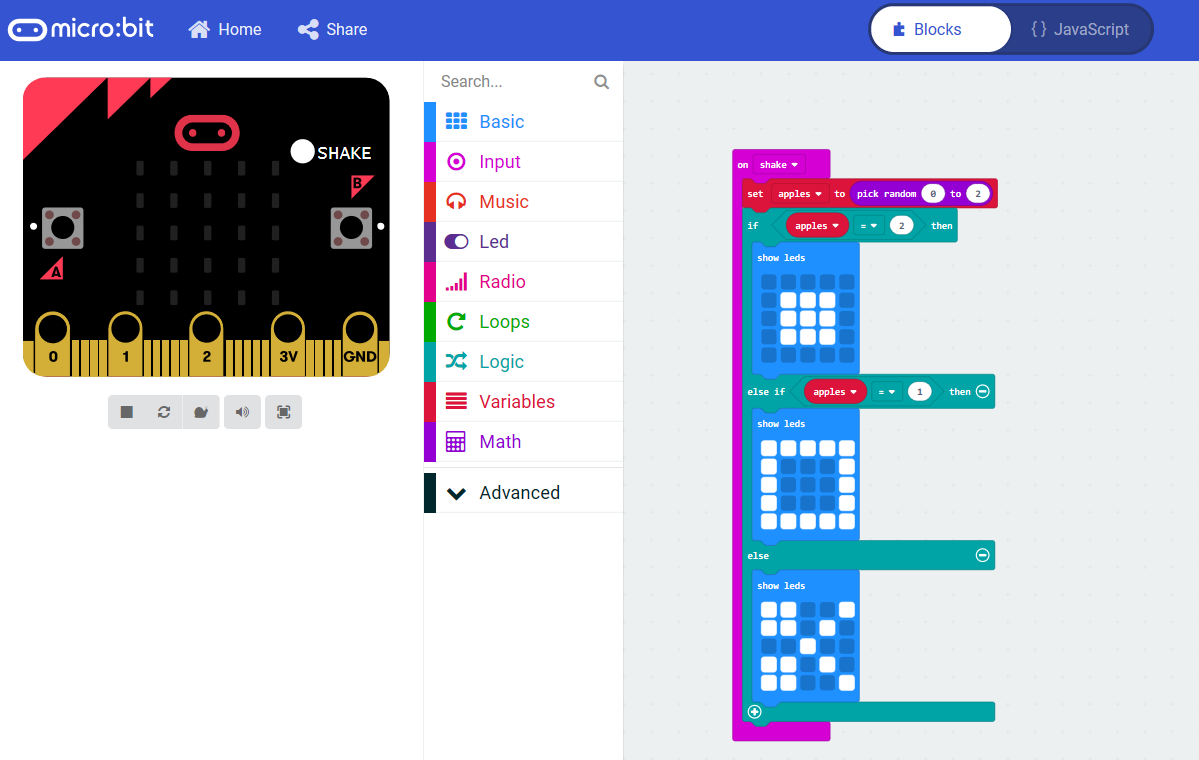


Wing (2006) states that computational thinking “involves solving problems, designing systems and understanding human behaviour by drawing on concepts fundamental to computer science.” With this in mind, the micro:bit does assist in the development of creative and computation thinking as students are using these technologies to create products they haven’t considered before. However, the technology doesn’t allow widespread opportunities for students to create and design their own unique concepts and ideas. The micro:bit simply creates a path to direct and develop students’ skills to competently apply their understanding and knowledge of the technology’s functions to other avenues. (Kafai, 2016). This ultimately means that the program builds students’ skills to apply their prior knowledge of coding, technology and computational thinking to design and create unique ideas through more complex technological opportunities.
References:
Andrews, C. (2016). BBC micro:bit – a little bit too late? [IT education]. Engineering & Technology, 11(4), 30-33.
Kafai, Y. (2016). From Computational Thinking to Computational Participation in K–12 Education. Association For Computing Machinery. Communications Of The ACM, 59(8), 26-27.
Schmidt, A. (2016). Increasing Computer Literacy with the BBC micro:bit. IEEE Pervasive Computing, 15(2), 5-7.
Wing, J. M. (2006). Computational thinking. Communications of the ACM, 49(3), 33-35.

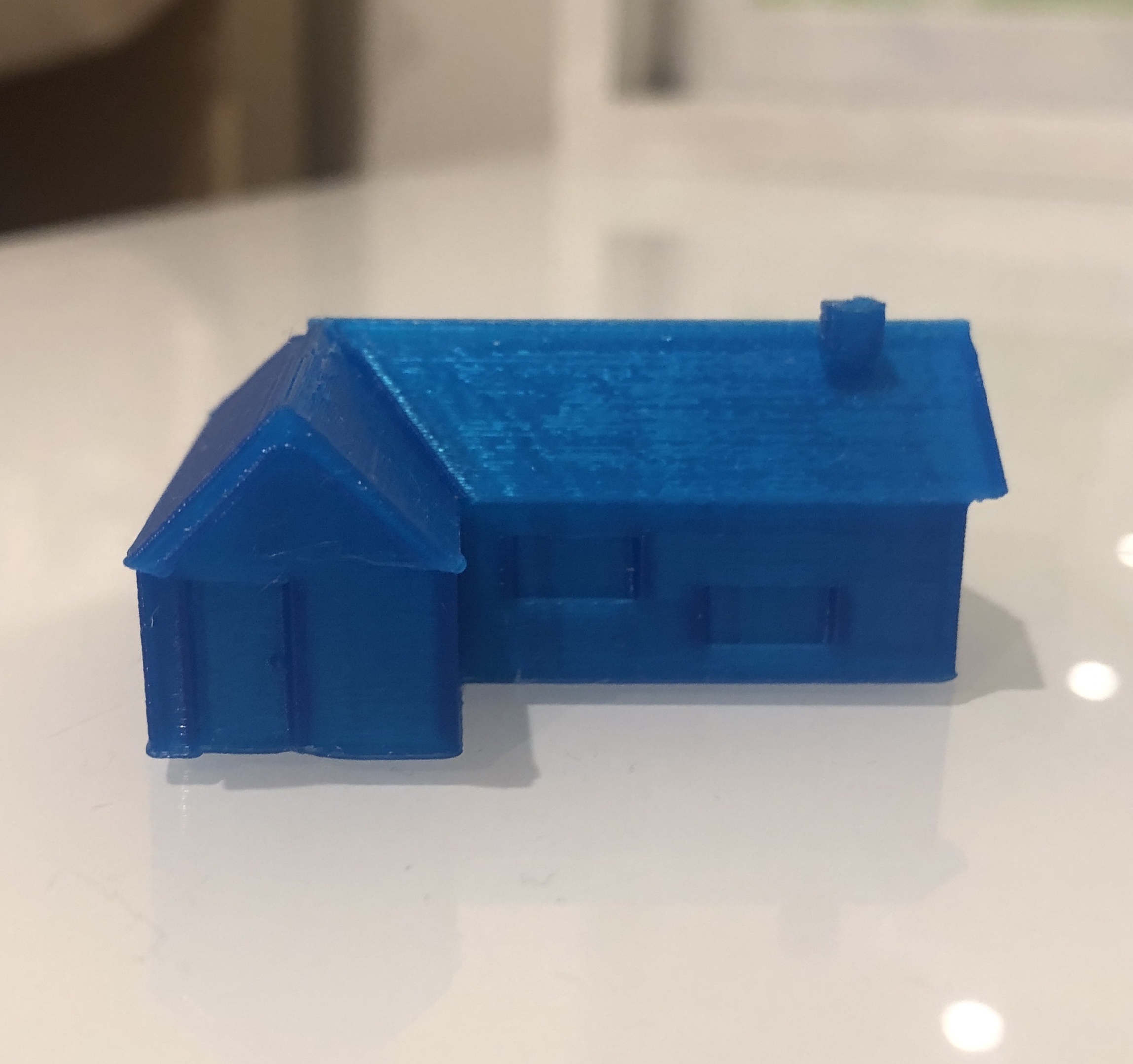
This week in tutorials we explored the wonders of 3D printing. We had a chance to step into the shoes of students and learn how to navigate our way through the program SketchUp and watch our ideas come to life! Now don’t get me wrong, it was hard! But completely do-able with a bit of practice! Having spent a small amount of time exploring the program in class and at home I am confident that I would be capable of creating some awesome tasks for my students to create and design 3D objects. Above is an image of my design on SketchUp and below if the 3D version which was kindly printed out by my tutor, David.
Berry et al (2010) suggests that 3D printing and design facilitates learning, advances skills, improves motivation and engagement, inspires creativity and develops interest in STEM subjects and possible future career options. Ultimately a teacher will foster the highest potential for creativity when developing a project-based task. Here students engage in problem solving, by completing the entire design cycle beginning with creation and concluding with a physical model. (Ford & Minshall, 2019). 3D design allows for self-directed construction, experimentation and opportunities for student reflection and observation. (Eisenberg, 2013). Published research provides countless examples of 3D printing class projects including prosthetic hand designs, bridge structures, desk lamps and many more. (Ford & Minshall, 2019).
I have chosen some additional examples that I believe have the highest potential to foster creativity. My first example is creating a musical instrument. (Ford & Minshall, 2019). This task could be presented to students from a range of ages and abilities. Depending on the criteria provided, students could work individually or collaboratively to design a unique instrument with a number of qualities. If I were the teacher I would ask students to design a new instrument that has at least 2 sound functions. Another project could involve students designing and planning the characteristics of a city. This city would be set in the future and students can design it however they like, as long as they can provide reasoning to support their design.
References
Berry, R., Bull, G., Browning, C., Thomas, C., Starkweather, G., & Aylor, J. (2010). Use of Digital Fabrication to Incorporate Engineering Design Principles in Elementary Mathematics Education. Contemporary Issues In Technology And Teacher Education, 10(2).
Eisenberg, M. (2013). 3D printing for children: What to build next?. International Journal Of Child-Computer Interaction, 1(1), 7-13.
Ford, S., & Minshall, T. (2019). Invited review article: Where and how 3D printing is used in teaching and education. Additive Manufacturing, 25, 131-150.

Meet the Ozobot
The Ozobot is a pocket-sized robot that comes in two model designs, Bit and Evo. These robots can be programmed to follow lines either drawn by coloured markers or created digitally on iPads and computers. (Green, Wagner & Green, 2018). Ultimately the colours send coded information to the bots that determines their speed, direction and movement.

What does this mean for education?
The Australian K-12 syllabus requires educators to provide a platform that prepares students with skills and confidence in using ‘computational thinking and creativity to understand the world.’ (Computing at School, 2013). In today’s modern day, providing opportunities for investigation and creation inside the classroom is vital for preparing young people with skills for the future. By introducing resources such as the Ozobot students become familiar with programming, coding and the wide availability of technology accessible.
How can Ozobot’s be used within the classroom?
As students become familiar with the Ozobot’s teachers can allow students to progress from guided to independent work and therefore set tasks that explore cross-curricular areas through open ended and creative investigations. This is where the creativity begins! Students can use the Ozobot’s to devise and answer problems, to explore direction, code a story and so much more.
Kyle Kitchen – EdTech and Makerspace Specialist said:
“It doesn’t matter if you’re beginning your coding journey or have been coding for years, the amount of problem solving, creativity and engagement that my students and myself have when coding with Ozobot is phenomenal.”
(Educational Programming Robots | Ozobot Edu)
Teachers have successfully created countless games, competitions and activities that allow students their own creative freedom to devise a plan and or answer to an open-ended task. One of the many advantages of the Ozobot is that as students code and organise their ideas they can then watch their programming come to life and decide if their coding was successful or not. (Highfield, 2010). Ultimately encouraging reflection through rich mathematical computation and engagement.
Although Ozobots have great potential for fostering creativity, the programs biggest weakness is how teachers choose to use them. Creativity depends on the teacher’s willingness to create tasks that are open-ended and allow students their own freedoms in the design process. So yes, Ozobots have countless opportunities to promote creativity in the classroom, however teachers must provide appropriate opportunities for students to demonstrate their unique and creative ideas.
References
Computing at School (2013). Computing in the National Curriculum – A guide for Primary teachers. Available at: http://www.computingatschool.org.uk/data/uploads/CASPrimaryComputing.pdf
Educational Programming Robots | Ozobot Edu. Retrieved from https://ozobot.com/stem-education
Green, T., Wagner, R., & Green, J. (2018). A Look at Robots and Programmable Devices for the K-12 Classroom. Techtrends, 62(4), 414-422.
Highfield, K. (2010). Robotic toys as a catalyst for mathematical problem solving: Kate Highfield describes a series of tasks in which robotic toys are used to develop young children’s mathematical and metacognitive skills. Australian Primary Mathematics Classroom, Summer, 15(2), 22.
 Exploring Digital Creativity In Education